 About Us
 Web Design
 SEO
SEO Social Media
 Integrations
 Web Hosting
 Case Studies
 Captain's Blog
 Pay Per Click
 Web Apps
 PMP
PMP Careers




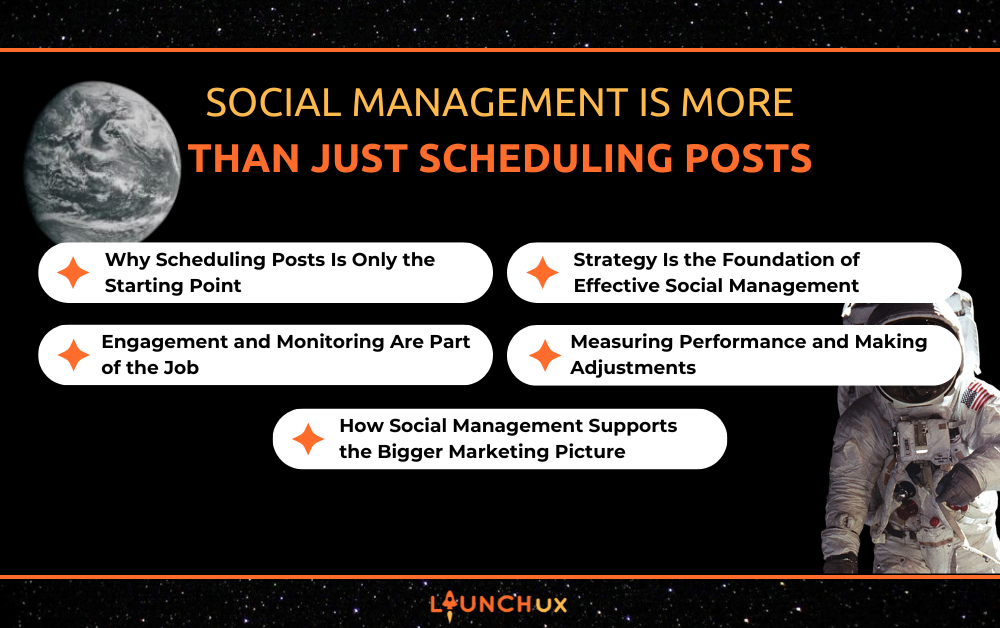
For many small business owners, social management can feel like just another task on an already full plate. Posting consistently often becomes the goal—get something up, schedule it, and move on. While that approach keeps accounts active, it rarely delivers the visibility or engagement businesses expect.
Social management goes beyond simply filling a content calendar. It’s about using social media with purpose—sharing the right messages, engaging with the right audience, and learning from what works over time. When managed intentionally, social media becomes a practical tool that supports brand recognition, customer trust, and steady business growth rather than just another box to check.
Why Scheduling Posts Is Only the Starting Point
Posting Consistently Doesn’t Equal Managing Social Media
Scheduling posts is often where small businesses begin with social media, and it serves an important purpose. Consistency helps maintain visibility and signals that a business is active. However, consistency without intention rarely leads to meaningful engagement or business impact.
When posts are created simply to fill space on a calendar, they tend to feel generic or repetitive. Audiences may see the content, but they are less likely to interact with it or remember the brand behind it. Effective social management requires understanding why a post exists—whether it’s meant to educate, build trust, start a conversation, or guide someone toward a next step.
The Limits of “Set It and Forget It” Social
Scheduling tools make it easy to plan content in advance, but relying on automation alone creates gaps. Social platforms change frequently, and audience preferences shift over time. A post scheduled weeks in advance may no longer be timely, relevant, or aligned with current conversations when it finally goes live.
“Set it and forget it” social media also removes the opportunity to respond in real time. Comments, questions, and messages are a key part of how social media works, especially for small businesses building relationships with their audience. Without active monitoring, those interactions go unanswered, which can hurt engagement and credibility.
True social management treats scheduling as just one step in an ongoing process. It involves reviewing performance, adjusting content based on what resonates, and staying engaged with your audience. For small businesses, this approach turns social media from a passive task into an active channel that supports awareness, trust, and long-term growth.
Strategy Is the Foundation of Effective Social Management
Defining Goals Before Creating Content
Before a single post is written or scheduled, social management should start with clear goals. For small business owners, this step is often skipped, which leads to content that feels busy but unfocused. Goals help determine what success actually looks like—whether that’s increasing brand awareness, driving website traffic, generating leads, or strengthening relationships with existing customers.
When goals are clearly defined, content becomes more intentional. Educational posts support awareness, behind-the-scenes content builds trust, and promotional posts guide users toward action. Without this structure, it becomes difficult to measure performance or understand why certain posts succeed while others fall flat.
Platform-Specific Strategy Matters
Not every platform serves the same purpose, and treating them all the same limits results. What works on Facebook may not perform well on Instagram or LinkedIn. Each platform has its own audience expectations, content formats, and engagement patterns.
Effective social management considers where your audience spends time and how they use each platform. For example, Facebook may be ideal for community-focused content and updates, while LinkedIn supports professional insights and thought leadership. Aligning content with platform behavior helps posts feel natural rather than forced.
Content Pillars vs Random Posting
Content pillars provide a framework for what your business talks about on social media. These themes might include education, industry insights, customer stories, promotions, and brand values. When posts align with defined pillars, social feeds feel consistent and purposeful.
Random posting, on the other hand, often leads to mixed messaging and uneven performance. Content pillars make planning easier, improve consistency, and help audiences understand what your business represents over time. For small business owners, this structure reduces guesswork and turns social management into a repeatable, manageable process.
Engagement and Monitoring Are Part of the Job
Social Media Is a Two-Way Channel
One of the most overlooked aspects of social management is engagement. Social media is not just a place to broadcast updates—it’s a space for conversation. When followers comment, react, or send messages, they are opening a line of communication with your business.
For small business owners, responding to comments and messages helps build trust and credibility. Even simple interactions show that there are real people behind the brand. Over time, this responsiveness encourages more engagement, which can increase reach and visibility across platforms.
Monitoring Mentions and Conversations
Not all engagement happens directly on your posts. Customers may mention your business in comments, tag your account, or discuss your services elsewhere on social platforms. Monitoring these mentions allows you to stay informed about how your brand is being talked about and gives you opportunities to join relevant conversations.
Active monitoring also helps identify questions, concerns, or trends that can inform future content. When businesses pay attention to what their audience is saying, social media becomes a feedback loop rather than a one-sided message board.
How Engagement Impacts Reach and Visibility
Engagement plays a direct role in how social platforms distribute content. Posts that receive likes, comments, and shares are more likely to be shown to additional users. When engagement is ignored, even well-written posts may struggle to gain traction.
Consistent interaction signals to platforms that your content is valuable to your audience. For small businesses, this makes engagement an essential part of social management—not an optional add-on. Responding, listening, and participating help extend reach while strengthening relationships with the people most likely to support your business.
Measuring Performance and Making Adjustments
Metrics That Matter Beyond Likes
Likes are easy to notice, but they rarely tell the full story. For small business owners, effective social management means looking at metrics that reflect real impact. Reach shows how many people are seeing your content, engagement reveals how they interact with it, and clicks indicate whether social posts are driving traffic to your website or other key pages.
Understanding these metrics helps clarify what content is resonating with your audience. A post with fewer likes but higher clicks may be far more valuable than one that looks popular but leads nowhere.
Identifying What Content Actually Works
Performance data provides insight into patterns over time. Certain topics, formats, or posting times may consistently perform better than others. Reviewing this information helps businesses move away from guesswork and focus on content that delivers results.
This process also highlights what is not working. Content that repeatedly underperforms may need to be adjusted or retired altogether. Social management is most effective when it uses performance insights to guide future decisions rather than repeating the same approach indefinitely.
Optimizing Based on Data, Not Assumptions
Making adjustments is a critical part of managing social media. This might include refining messaging, testing different visuals, adjusting posting frequency, or shifting focus to higher-performing platforms. Small, consistent improvements compound over time.
For small business owners, this ongoing optimization turns social media into a learning process. Instead of posting blindly, social management becomes a system that adapts to audience behavior and continuously improves performance.
How Social Management Supports the Bigger Marketing Picture
Reinforcing Brand Voice and Consistency
Social media is often one of the most frequent touchpoints a customer has with a small business. Consistent messaging, tone, and visuals help build recognition and trust over time. When social management is handled intentionally, every post reinforces who the business is, what it stands for, and how it helps its audience.
Without this consistency, social feeds can feel disjointed. Messaging may shift from post to post, making it harder for customers to connect with the brand. A thoughtful social management approach keeps communication clear and recognizable across platforms.
Supporting SEO, Paid Ads, and Website Traffic
Social media does not work in isolation. Strong social management supports SEO, pay-per-click advertising, and overall website performance by amplifying content, reinforcing key messaging, and driving qualified traffic back to your site.
Social platforms often serve as the bridge between discovery and action. When social posts lead users to a clear, fast, and well-structured website, they support SEO efforts by improving engagement signals and encouraging deeper site interaction. When posts point to a slow, confusing, or outdated website, that momentum is lost—regardless of how strong the content or targeting may be.
Effective social management works alongside SEO, not separately from it. A solid website ensures that traffic coming from social media has a place to land, explore, and convert, allowing social, SEO, and pay-per-click advertising to work together as part of a cohesive marketing strategy.
When DIY Social Media Starts to Break Down
Many small business owners begin managing social media themselves, which can work early on. Over time, competing priorities often lead to inconsistent posting, limited engagement, and missed opportunities. Without regular analysis and coordination with the website and other marketing efforts, social media can become disconnected from actual business goals.
Recognizing when DIY social media is no longer effective is an important step. Social management delivers the most value when it works alongside a strong website and a clear marketing strategy, rather than operating as a standalone task.
Conclusion
Social management is more than keeping your accounts active—it’s about using social media with intention. For small business owners, that means moving beyond scheduling posts and focusing on strategy, engagement, performance, and how social fits into the bigger marketing picture. When social media is managed thoughtfully, it becomes a tool that supports visibility, trust, and steady growth.
The most effective social management works in sync with a strong website, clear SEO goals, and other marketing efforts like pay-per-click advertising. Each channel supports the others, creating a consistent experience from first impression to conversion. If your social media feels busy but not productive, it may be time to step back and evaluate how it’s being managed. For businesses looking to build a more connected, results-driven approach, LaunchUX can help align social management with the rest of your digital strategy.