 About Us
 Web Design
 SEO
SEO Social Media
 Integrations
 Web Hosting
 Case Studies
 Captain's Blog
 Pay Per Click
 Web Apps
 PMP
PMP Careers




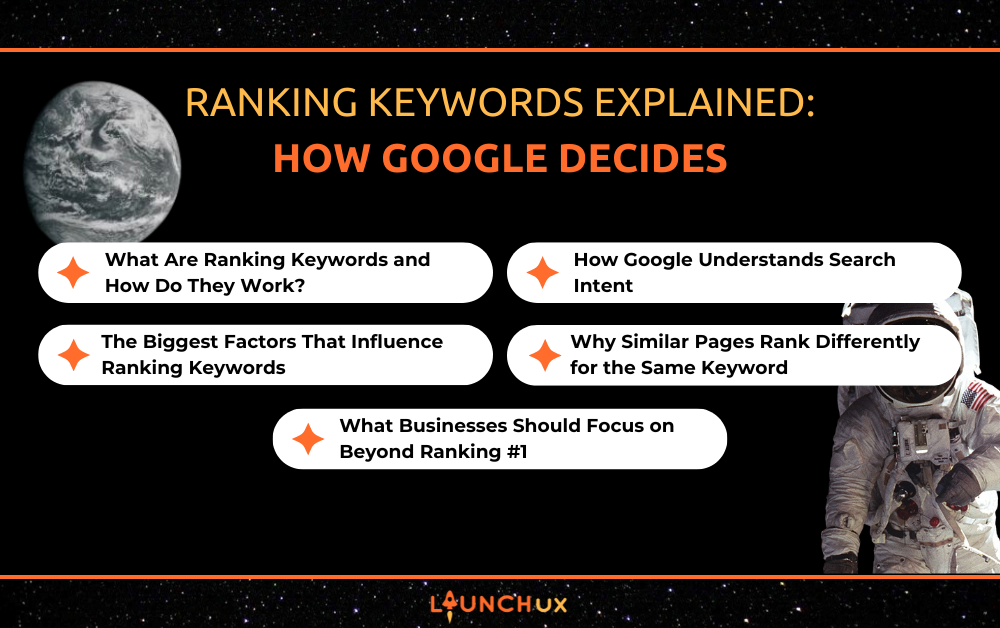
Ranking keywords are often treated as the ultimate measure of SEO success, but they are really the result of a much broader evaluation process. Google considers relevance, intent, authority, and user experience—not just keyword placement—when deciding which pages deserve to rank first.
At LaunchUX, we view ranking keywords as signals, not shortcuts. Understanding how Google determines rankings helps businesses move beyond guesswork and build SEO strategies that drive sustainable visibility, qualified traffic, and long-term growth.
What Are Ranking Keywords and How Do They Work?
Target Keywords vs Keywords You Actually Rank For
Target keywords are the phrases a business intentionally optimizes a page around. Ranking keywords, on the other hand, are the terms that the page actually appears in search results. These are not always the same. A well-optimized page often ranks for dozens of related searches, even if only one or two were planned during content creation.
Why Pages Rank for Multiple Related Keywords
Google evaluates topics, not just individual phrases. When content thoroughly covers a subject, it naturally aligns with multiple search variations and related terms. This is why strong pages earn visibility across a broader keyword set rather than relying on a single exact match.
How Rankings Reflect Search Demand
Ranking keywords evolve based on how people search. As language, trends, and user needs change, Google adjusts results to match that demand. Pages that stay relevant, clear, and useful are more likely to maintain or improve their rankings over time, while thin or outdated content gradually loses visibility.
How Google Understands Search Intent
The Different Types of Search Intent
Search intent is the “why” behind a keyword. Two people can search similar phrases but expect completely different results. Because of this, search intent plays a major role in how ranking keywords are determined. Google’s goal is to predict what the user wants to accomplish and show the page that best satisfies that expectation.
Most searches fall into three primary intent categories:
- Informational intent: The user is looking to learn, research, or better understand a topic. These searches often include phrases like how to, what is, why, guide, or examples. Google typically favors blog posts, guides, videos, and FAQ-style pages because the user is seeking answers rather than immediate action.
- Navigational intent: The user wants to reach a specific website, brand, or platform. These searches usually include brand names, product names, or location-based branded terms. Google responds by prioritizing homepages, branded service pages, Google Business Profiles, and authoritative directory listings.
- Transactional intent: The user is ready to take action, such as requesting a quote, booking a service, or making a purchase. Searches often include words like pricing, near me, services, company, best, or a specific service name. Google typically favors service pages, location pages, product pages, and comparison content because the user is closer to converting.
In practice, intent is not always cleanly separated. Many searches blend informational and transactional intent, especially during the research phase. Google accounts for this by presenting mixed results, and strong SEO strategies—like those used at LaunchUX—focus on identifying the dominant intent and building content that aligns with what users are actually trying to achieve.
Why Exact-Match Keywords Matter Less Than Context
Google no longer relies on exact wording to determine relevance. It evaluates meaning, phrasing, and context to understand what a user actually wants. Pages that focus on clearly answering a question or solving a problem tend to outperform content that simply repeats the same keyword throughout the page.
Matching the Right Page to the Right Query
At ranking time, Google compares available pages and selects the one that most closely matches the intent of the search. This is why a blog post may rank higher than a service page—or vice versa—depending on the query. Strong rankings come from aligning content format, depth, and messaging with how users search.
The Biggest Factors That Influence Ranking Keywords
Content Relevance and Topic Coverage
Google prioritizes pages that clearly and thoroughly address the topic behind a search. This goes beyond using the right phrases—it’s about answering the full scope of related questions a user may have. Pages that provide clear explanations, logical structure, and useful supporting details tend to rank higher because they demonstrate subject-matter relevance and completeness.
Authority, Trust, and Backlinks
Authority signals help Google determine whether a site is credible enough to rank. Backlinks from reputable websites act as endorsements, indicating that others trust the content. Over time, consistently publishing high-quality, accurate information builds domain-level trust, making it easier for new pages to earn visibility for competitive ranking keywords.
User Engagement Signals
User engagement signals help Google determine whether a page delivers on the promise made in the search results. These signals focus less on isolated metrics and more on overall behavior patterns that indicate whether users find the content useful and relevant.
Key engagement indicators include:
- Click-through behavior from search results
Consistent clicks suggest the page title, meta description, and topic alignment match what users expect. - Time spent on page
Meaningful time on the page can indicate that users are engaging with the content rather than leaving immediately. - Scrolling and content consumption
Scrolling behavior helps signal whether users are actually reading the page or abandoning it early. - Interaction with internal links
Clicking through to related pages shows interest, trust, and a logical content structure. - Bounce patterns and pogo-sticking
Quickly returning to search results after clicking a page may indicate a mismatch between the query and the content.
It’s important to note that engagement is about satisfaction, not just duration. A user who finds the right answer quickly and leaves can still send a positive signal if the page fulfills the search intent effectively.
Why Similar Pages Rank Differently for the Same Keyword
Domain Strength and Historical Performance
Google considers how a website has performed over time when evaluating rankings. Sites with a history of publishing high-quality content, earning trustworthy backlinks, and maintaining consistent performance often have an advantage. This doesn’t mean newer sites cannot rank, but they typically need clearer relevance and stronger signals to compete with established domains.
Content Quality and Intent Alignment
Two pages can target the same keyword and cover similar topics, yet perform very differently. The difference usually comes down to how well the content matches search intent. Pages that clearly answer the user’s question, use the right format, and provide practical value tend to outperform content that is vague, overly broad, or misaligned with what the searcher wants.
Internal Competition and Keyword Cannibalization
When multiple pages on the same website target the same keyword, they can compete against each other. This confusion makes it harder for Google to determine which page is the best result, often leading to weaker rankings across all competing pages. Clear keyword focus and intentional internal linking help prevent this issue and strengthen overall visibility.
What Businesses Should Focus on Beyond Ranking #1
High-Intent Ranking Keywords
Ranking first for a keyword is not always the goal if that keyword does not drive meaningful action. High-intent ranking keywords attract users who are closer to making a decision, such as requesting a quote, booking a service, or contacting a business. Prioritizing intent over volume helps ensure rankings contribute to real business outcomes.
Turning Rankings Into Leads
Ranking on the first page creates opportunity, but conversions determine value. Once a user lands on a page, Google’s job is done—everything that happens next depends on how clearly the page guides that visitor toward action. Pages that rank well but fail to convert often lack focus, clarity, or alignment with user intent.
Effective conversion-focused pages address the user’s problem immediately. Clear headlines, concise explanations, and supporting proof help visitors quickly understand why the page is relevant to them. When users feel confident they are in the right place, they are far more likely to continue engaging.
Calls to action should feel like a natural next step, not a disruption. Whether the goal is to request a quote, schedule a consultation, or explore related services, CTAs should be visible, specific, and tied to the intent behind the keyword. Supporting elements such as internal links, testimonials, and trust signals help reinforce credibility and reduce hesitation.
At LaunchUX, we view rankings and conversions as inseparable. SEO brings the right users to the page, but thoughtful structure, messaging, and UX design are what turn that visibility into qualified leads.
Measuring SEO Success the Right Way
Keyword position is only one piece of the SEO picture. Engagement, conversions, assisted leads, and performance trends over time provide a clearer view of success. Businesses that focus on these metrics gain a more accurate understanding of how ranking keywords contribute to growth—beyond simply being visible in search results.
Conclusion
Ranking keywords are not a shortcut to success, they are the result of doing SEO the right way. Google rewards pages that understand search intent, provide clear and relevant answers, demonstrate authority, and deliver a strong user experience. When those elements work together, rankings follow naturally.
For businesses, the real value of ranking keywords lies in what they enable. Visibility creates opportunity, but strategy determines whether that opportunity turns into growth. Evaluating how your site ranks—and why—can reveal where content, structure, or intent alignment needs improvement. If you’re looking to better understand your rankings or build a strategy that turns visibility into results, contact LaunchUX to start the conversation.