 About Us
 Web Design
 SEO
SEO Social Media
 Integrations
 Web Hosting
 Case Studies
 Captain's Blog
 Pay Per Click
 Web Apps
 PMP
PMP Careers




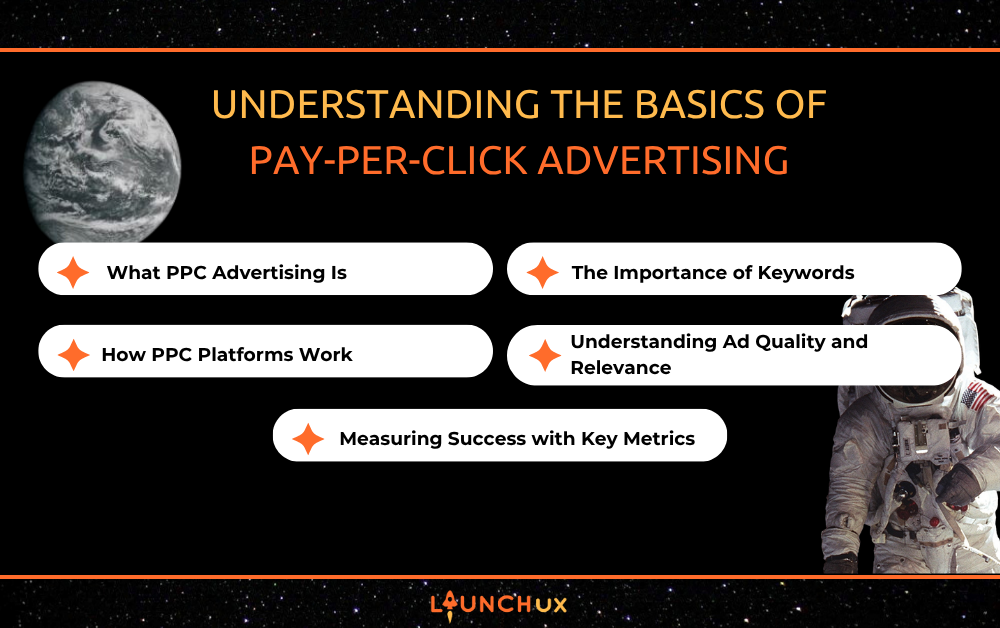
Pay-Per-Click (PPC) advertising has become a cornerstone of modern digital marketing, enabling businesses to reach highly targeted audiences quickly. LaunchUX helps companies maximize their online visibility through expert PPC campaign management, ensuring that every ad drives measurable results. Understanding the basics of PPC is essential for any business looking to enhance online engagement and improve ROI. From platforms and keywords to ad quality and performance metrics, every aspect of PPC contributes to campaign success. Mastering these fundamentals allows businesses to implement strategies that are both efficient and effective.
What PPC Advertising Is
Performance-Based Advertising
In Pay-Per-Click campaigns, advertisers incur a cost each time a user clicks their ad. Unlike traditional marketing or purely organic traffic strategies, PPC allows businesses to place ads directly in front of potential customers. This targeted approach provides immediate visibility while ensuring the budget is spent only when engagement occurs. PPC campaigns are results-driven, with payments tied to actual interactions rather than impressions. Grasping this performance-based concept is a critical first step in any PPC campaign management strategy.
Targeted Exposure
The true advantage of PPC lies in its ability to target audiences with precision. Ads can be shown to users based on search terms, demographics, geographic location, or online behavior. This ensures that marketing budgets are directed toward individuals most likely to convert. By combining targeting options with compelling ad copy, businesses can reach the right people at the right moment. Proper targeting enhances the overall efficiency of a PPC campaign and maximizes potential returns.
Immediate Results
Unlike SEO, which may take months to produce results, PPC campaigns deliver almost instant traffic and visibility. When executed properly, ads appear as soon as campaigns go live, allowing businesses to generate leads and track performance immediately. This rapid feedback loop enables marketers to adjust strategies in real time for optimal outcomes. Immediate results make PPC a highly attractive option for businesses seeking fast, measurable impact. Understanding this dynamic helps set realistic expectations and goals for every campaign.
How PPC Platforms Work
Major PPC Platforms
For most PPC campaigns, popular options include Microsoft Advertising, Google Ads, and social media platforms such as Facebook, LinkedIn, and Instagram. The platforms provide specialized features and targeting strategies that align with diverse business goals and audience types. Knowing the pros and cons of every platform allows you to craft campaigns that maximize performance. LaunchUX emphasizes selecting the right platform to match the business’s target audience and marketing goals. Using the appropriate platform ensures that campaigns are both relevant and cost-efficient.
Auction System Mechanics
PPC advertising works via an auction system that lets advertisers bid on specific keywords or audience segments. The winning ads are determined not only by the bid amount but also by ad quality, relevance, and user experience. A well-optimized ad with high relevance can outperform a higher bid, reducing cost-per-click while maximizing exposure. Understanding these mechanics allows businesses to design competitive campaigns that make the most of their budget. Mastery of auction strategies is a key component of successful PPC campaign management.
Optimization Opportunities
Beyond selecting a platform and setting up a PPC campaign, PPC campaign management requires continuous optimization. Advertisers must monitor performance, adjust bids, and refine targeting to improve results. Platforms often provide insights and analytics that help guide these adjustments. By taking a data-driven approach, businesses can enhance ad performance and reduce wasted spend. Effective optimization ensures that campaigns remain competitive and continue generating meaningful engagement.
The Importance of Keywords
Relevance and Targeting
Keywords are the foundation of most PPC campaigns, especially in search engine advertising. Choosing relevant and highly targeted keywords ensures that ads appear when potential customers are actively searching for related products or services. This alignment between search intent and ad content improves click-through rates and conversion opportunities. Careful keyword selection prevents budget waste on irrelevant clicks. A strategic approach to keyword research is critical to PPC success.
Long-Tail Keywords
Using long-tail keywords allows advertisers to reach a more specific audience with greater buying intent. These longer, more precise search terms often have lower competition and cost-per-click. Incorporating long-tail keywords into campaigns can increase relevance and improve ROI. LaunchUX emphasizes balancing broad and long-tail keywords for comprehensive PPC coverage. Leveraging both types ensures campaigns capture high-value traffic without overspending.
Negative Keywords
Properly managing negative keywords is an important part of a PPC strategy, as they prevent ads from showing for irrelevant searches. Excluding these terms reduces wasted spend and improves overall campaign efficiency. This practice ensures that ad impressions and clicks come from users who are more likely to convert. Proper use of negative keywords contributes to a higher quality score and better performance. Incorporating this strategy is a hallmark of effective PPC campaign management.
Understanding Ad Quality and Relevance
Impact on Placement
Ad quality and relevance directly affect where and how often an ad is displayed. Search engines prioritize ads that match user intent and provide a positive experience. High-quality ads with compelling copy and optimized landing pages often achieve better placement at lower costs. Understanding this connection allows businesses to maximize their ad exposure and return on investment. Quality-driven campaigns outperform poorly constructed ads every time.
User Experience Considerations
Ads should be designed to guide users seamlessly to a valuable destination, whether it’s a landing page, product page, or sign-up form. Providing a strong user experience increases the likelihood of engagement and conversion. Poor ad relevance or confusing navigation can lead to wasted clicks and higher costs. LaunchUX focuses on crafting ad content that aligns with user expectations and business goals. Prioritizing user experience ensures sustainable success for PPC campaigns.
Ongoing Testing and Improvement
Continuous testing of ad copy, visuals, and calls-to-action helps uncover which strategies generate the most engagement from your audience. Regular adjustments based on data-driven insights improve both click-through and conversion rates over time. This iterative process is essential for maintaining campaign effectiveness in a competitive digital landscape. Successful PPC campaign management involves constant refinement and optimization. Testing ensures that campaigns evolve alongside audience behavior.
Measuring Success with Key Metrics
Click-Through Rate (CTR)
CTR indicates how effectively an ad attracts clicks from the target audience. A high CTR suggests that the ad is relevant, engaging, and aligned with user intent. Monitoring CTR allows marketers to refine targeting, messaging, and placement. LaunchUX emphasizes analyzing this metric alongside other KPIs to get a complete view of performance. Strong CTRs are a positive signal for both ad platforms and campaign results.
Cost Per Click (CPC) and Budget Efficiency
CPC measures the cost per click for each click generated by a campaign. Keeping CPC within budget is essential for maximizing ROI. Lowering CPC without compromising traffic quality requires careful bidding, keyword selection, and ad optimization. Understanding and managing CPC ensures that campaigns remain cost-effective. Efficient budget management is a core skill in PPC campaign management.
Conversion Rate and ROI
Conversion rate tracks how many clicks result in desired actions, such as purchases, sign-ups, or inquiries. High conversion rates demonstrate that the campaign successfully attracts relevant traffic. Monitoring ROI ensures that every dollar spent contributes to business goals. By analyzing conversions alongside spend and engagement metrics, businesses can make informed decisions about scaling or refining campaigns. Evaluating these metrics is critical for long-term PPC success.
Conclusion
Understanding the fundamentals of PPC advertising is essential for creating campaigns that deliver measurable results. From grasping the concept of performance-based advertising to mastering keywords, ad quality, and analytics, every aspect contributes to success. LaunchUX specializes in PPC campaign management, helping businesses optimize their ads, reach the right audience, and maximize ROI. By focusing on these foundational skills, companies can launch campaigns that are efficient, cost-effective, and highly engaging. Contact LaunchUX today to learn how our experts can elevate your PPC strategy and drive real business growth.