 About Us
 Web Design
 SEO
SEO Social Media
 Integrations
 Web Hosting
 Case Studies
 Captain's Blog
 Pay Per Click
 Web Apps
 PMP
PMP Careers





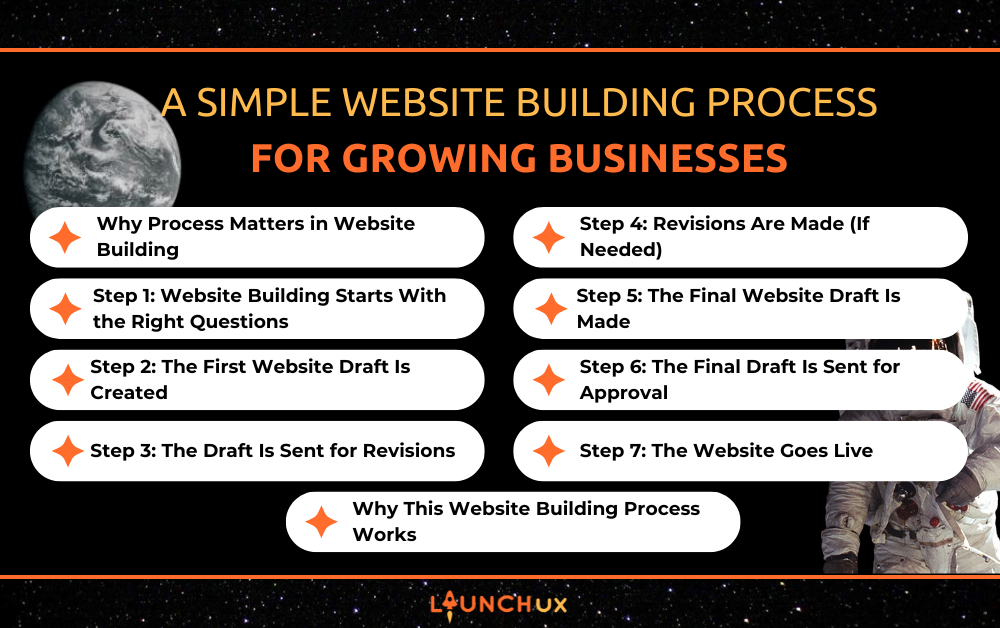
Website building often feels more complicated than it should, especially for growing businesses trying to balance day-to-day work with long-term growth. Too many projects get stuck in unclear timelines, repeated revisions, or confusion about what happens next. At LaunchUX, we keep website building simple by following a clear, step-by-step process that removes guesswork from the start. By beginning with the right questions and guiding clients through each stage, we make it easier to move from idea to launch with confidence and clarity.
Why Process Matters in Website Building
A website project can move quickly and smoothly, or it can become frustrating and drawn out. The difference usually comes down to process. When website building starts without a clear plan, it often leads to misaligned expectations, repeated changes, and delays that slow everything down. For growing businesses, that can mean lost time and missed opportunities.
Having a defined website building process creates structure from the very beginning. It helps everyone understand what happens next, when feedback is needed, and how decisions are made. Instead of reacting to problems as they come up, the process keeps the project moving forward with purpose. This clarity allows us to focus on building a website that supports business goals, rather than spending time untangling confusion along the way.
When process comes first, website building becomes more efficient, more collaborative, and far less stressful. That structure is what allows projects to stay on track and deliver results that actually help businesses grow.
Step 1: Website Building Starts With the Right Questions
Every website we build at LaunchUX begins with a simple but important step: asking the right questions. Before any design or development work starts, we take time to understand the business behind the website. This includes learning what the company does, who it serves, what makes it different, and what the website needs to accomplish.
To do that, we ask questions like:
- What websites do you like, and what do you like about them?
- Does your current website accurately represent your business?
- Who is your target audience, and what action should visitors take?
- What content needs to be updated, added, or removed?
- What competitors should we be aware of?
While this step may feel detailed upfront, it saves time later by aligning expectations early. Instead of guessing what a business wants or needs, we build the website around clear answers and real goals. For growing businesses, this clarity helps ensure the website supports long-term growth, not just a successful launch.
Step 2: The First Website Draft Is Created
Once the discovery questions are complete, we move into building the first draft of the website. This is where all of the planning starts to take shape. Using the information gathered in Step 1, we create a complete working draft that reflects the structure, messaging, and goals discussed upfront.
The first draft focuses on layout, page flow, and how visitors move through the site. Content is placed intentionally, calls to action are defined, and the overall user experience is designed with the target audience in mind. While this version is not final, it gives clients a clear picture of how the website will function and feel. This approach allows feedback to be meaningful and keeps the project moving forward without unnecessary back-and-forth.
Step 3: The Draft Is Sent for Revisions
After the first draft is complete, we send it to the client for review. This step gives business owners the opportunity to see their website come together and confirm that everything aligns with their expectations. Rather than reviewing individual pieces in isolation, clients can experience the website as a whole and provide thoughtful feedback.
We encourage feedback that focuses on clarity, accuracy, and overall direction. Because the project started with clear questions and goals, this review process is typically smooth and focused. Clients know what to look for, and revisions are easier to communicate. This step ensures collaboration stays productive and the website continues moving toward a final version that feels right for the business.
Step 4: Revisions Are Made (If Needed)
Once feedback is received, we move into revisions. Any requested changes are made based on the review, whether that involves adjusting content, refining layout, or improving overall flow. Seeing the first draft often helps clients better visualize their website, and it is completely normal for ideas to evolve at this stage.
Some common revision requests we see include:
- Adjusting colors, fonts, or other design elements
- Updating or swapping out images
- Reworking headlines or page copy for clarity
- Refining page layout or section order
- Clarifying calls to action or button placement
- Adding or removing sections on a page
- Making small branding updates to better match the business
Because expectations were aligned early in the process, revisions are typically focused and efficient. If revisions are needed, they are completed with clear communication. If no changes are required, the project moves forward without delay, keeping the website building process on track.
Step 5: The Final Website Draft Is Made
After revisions are completed, we prepare the final draft of the website. This version reflects all approved updates and refinements, bringing together content, design, and structure into a polished experience. The goal at this stage is to ensure everything feels cohesive and aligned with the original goals of the project.
The final draft focuses on details. This includes reviewing page flow, confirming content accuracy, and making sure the website is ready for approval. Because the earlier steps were handled thoughtfully, this stage is about fine-tuning rather than making major changes, allowing the project to move confidently toward launch.
Step 6: The Final Draft Is Sent for Approval
Once the final draft is ready, it is sent to the client for approval. This step gives business owners the opportunity to review the completed website and confirm that everything is accurate and ready to go live. At this stage, the focus is on final confirmation rather than major changes.
During this review, we recommend checking:
- Phone numbers, email addresses, and contact forms
- Links across the site to ensure everything works correctly
- Location pages and service areas for accuracy
- Photos, logos, and branding elements
- Page content to confirm information and messaging are correct
- Calls to action and buttons to make sure they point to the right places
Because revisions were addressed earlier in the process, approval at this stage is typically straightforward. Once everything is confirmed, the project moves smoothly into launch.
Step 7: The Website Goes Live
Once the final draft is approved, the website is launched. At this point, everything has been reviewed, confirmed, and prepared, allowing the site to go live without last-minute surprises. Because each step in the website building process was handled with clarity, launch day is straightforward and stress-free.
After launch, the website is fully accessible to visitors and ready to support business growth. Whether the goal is generating leads, sharing information, or showcasing services, the site is built to perform from day one. For growing businesses, this means moving forward with a website that feels complete, intentional, and ready to grow alongside the company.
Why This Website Building Process Works
A clear website building process removes uncertainty and keeps projects moving in the right direction, but strong communication is what makes that process successful. By starting with the right questions and maintaining open communication throughout each stage, both the client and the web development team stay aligned from beginning to end. Everyone knows what to expect, when feedback is needed, and how decisions are made.
For growing businesses, this level of communication helps prevent delays and reduces unnecessary revisions. Questions are addressed early, feedback is clear, and updates are shared along the way, which keeps the project focused on real business goals. Instead of reacting to issues after they arise, the process encourages proactive collaboration and steady progress.
Most importantly, this approach creates a better experience for everyone involved. Clients feel informed and supported, and developers have the clarity needed to build efficiently. The result is a website that reflects the business accurately, launches smoothly, and is built on a foundation of trust, clarity, and consistent communication.
Conclusion: Website Building With Clarity and Confidence
Website building does not have to feel overwhelming or unpredictable. With the right process and clear communication, it can be a collaborative experience that moves smoothly from idea to launch. By starting with thoughtful questions, building intentional drafts, and keeping clients involved at the right moments, we create websites that are accurate, effective, and built with purpose.
At LaunchUX, our website building process is designed to support growing businesses every step of the way. The structure keeps projects on track, the communication keeps everyone aligned, and the end result is a website that is ready to support real business growth from day one.
If you are ready to start website building with a clear plan and a team that values communication, we would love to help.
Contact LaunchUX to begin your website project with confidence and clarity.