 About Us
 Web Design
 SEO
SEO Social Media
 Integrations
 Web Hosting
 Case Studies
 Captain's Blog
 Pay Per Click
 Web Apps
 PMP
PMP Careers





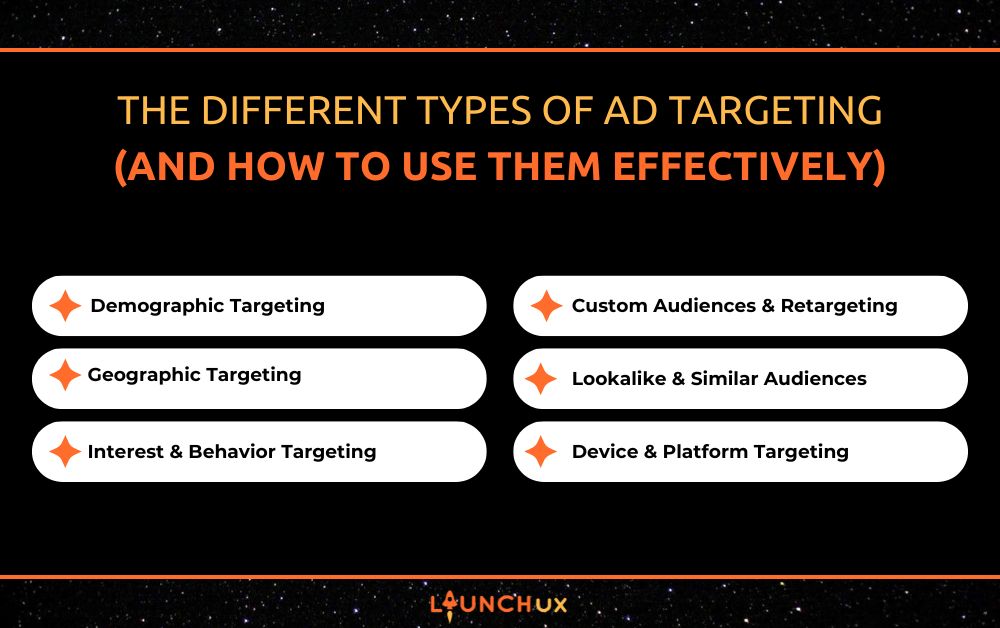
When it comes to running ads on social media, one of the biggest mistakes businesses make is trying to reach everyone. Without precise ad targeting, your ads could end up in front of people who have no interest in your product or service. That means wasted budget and missed opportunities. In this blog, we’ll break down the different types of ad targeting, show practical examples, and give you tips on how to test and refine your approach.
Demographic Targeting
Understanding Demographics
Demographic ad targeting lets you reach people based on age, gender, income level, education, and marital status. This is one of the most straightforward ways to start narrowing your audience. By focusing on these attributes, you can ensure your message lands with people most likely to find it relevant.
Who Should Use It
Brands with products tailored to specific life stages, income levels, or gender typically benefit most from demographic targeting. Luxury brands might focus on higher income brackets, while children’s products naturally target parents. It’s an effective way to segment broad audiences into meaningful groups.
Examples of Application
A jewelry company might target women aged 25-45 who are likely to be interested in fashion and accessories. An online course platform could focus on college graduates seeking professional growth, tailoring messaging to career advancement. These campaigns work best when you clearly understand who benefits most from what you offer.
Tips for Success
Combine multiple demographic filters to fine-tune your audience and boost ad performance. For example, target women aged 30-45 with kids for back-to-school shopping campaigns, ensuring your content speaks directly to their needs. Testing different combinations will help reveal which demographic mix drives the best results.
Geographic Targeting
Defining Geo-Targeting
Geo-targeting shows your ads to people in a specific location—by country, city, zip code, or even within a radius around your business. This strategy ensures your ads appear only to people who can actually visit your location or benefit from your local service.
When to Use It
It’s perfect for local businesses, events, or services tied to a location. Seasonal products that depend on climate or regional trends also benefit. Using geo-targeting helps you avoid spending money advertising to people too far away to ever become customers.
Examples of Use
A snow removal company could target northern cities where winter weather demands their services. A restaurant might advertise only within 10 miles of its location to bring in local diners. Even national brands use geo-targeting to run regional promotions tied to local events.
Advanced Strategies
Try geo-fencing to trigger ads when people enter a defined area, such as a shopping center or near your storefront. This approach can drive immediate foot traffic by reaching potential customers when they’re already nearby, increasing the chance they’ll stop in.
Interest & Behavior Targeting
What It Covers
Interest and behavior ad targeting focuses on reaching people based on hobbies, lifestyle choices, past purchases, and even life events like moving or getting married. It taps into what matters most to them, aligning your message with their current interests.
Why It Matters
Aligning ads with users’ interests makes your message far more relevant and engaging, leading to higher click-through rates and conversions. It helps ensure your budget is spent reaching people already inclined to care about what you offer.
Common Examples
You might advertise camping gear to outdoor enthusiasts or promote pet insurance to people who recently adopted a pet. By focusing on specific interests or recent activities, your ads stand out and speak to real needs and desires.
Pro Tips
Layer interests for sharper targeting. If you sell eco-friendly yoga mats, target people interested in both sustainability and yoga. This combined approach filters out broader audiences and zeroes in on those most likely to respond, making your campaigns more efficient.
Custom Audiences & Retargeting
What It Means
Custom ad targeting allows you to reach people who already know your brand—like past website visitors, customers, or your email subscribers. These are warm audiences who’ve shown interest before, making them more likely to convert.
Who Should Leverage This
Any business wanting to nurture existing relationships or re-engage people who showed interest but didn’t convert should use custom audiences. It’s particularly valuable for e-commerce, service-based businesses, and B2B companies that need multiple touches to close a sale.
Examples in Action
You might show a discount ad to customers who left items in their cart, or upsell camping accessories to people who previously bought a tent. These targeted nudges help close the loop and turn interest into action.
Maximizing Impact
Use segmented lists to personalize ads. For example, offer loyalty rewards to repeat buyers or announce a new product to your most engaged email subscribers. Tailored retargeting strengthens relationships and keeps your brand top of mind.
Lookalike & Similar Audiences
How It Works
Lookalike targeting finds new people who resemble your best customers by matching demographics, interests, and behaviors. It leverages existing data to expand your reach to people likely to have similar buying habits.
Best Use Cases
This approach is ideal for scaling campaigns after you’ve identified an audience that converts well. It helps you grow efficiently by leaning on proven data instead of starting from scratch every time.
Sample Campaigns
Create a lookalike audience from your top purchasers to find more high-value customers. Or base it on people who recently completed a lead form to generate similar high-intent prospects. The platform’s algorithms do the heavy lifting to find these matches.
Optimization Tips
Experiment with similarity percentages—1% for close matches that are almost identical to your core audience, or 5-10% for a broader group that still shares key traits. Testing different ranges helps you balance quality leads with overall reach.
Device & Platform Targeting
What You Target
You can customize ads by device type, like mobile vs. desktop, or by platform, such as Instagram, Facebook, or LinkedIn. This flexibility allows you to reach people where they’re most active and in the format they prefer.
Why It’s Important
People behave differently on mobile vs. desktop. Some platforms drive quick impulse purchases, while others are better for in-depth research or professional networking. Matching your ads to these behaviors makes your campaigns more effective.
Real Examples
Use mobile-optimized video with swipe-up offers on Instagram Stories for users on smartphones. On the other hand, promote downloadable white papers on LinkedIn to desktop users who are more likely to fill out longer forms. Each tactic plays to the strengths of the platform and device.
Fine-Tuning Results
Tailor your creative and calls to action to fit each platform’s style and how your audience engages there. Review performance metrics by device and platform to see where your budget delivers the highest ROI, then adjust accordingly.
Conclusion
Choosing the right ad targeting is just as important as crafting the perfect ad. With so many options available, you can make sure your ads appear to the people most likely to care. Keep testing different audience segments, watch performance metrics closely, and fine-tune your strategy to lower costs and boost results. Ready to make your ad dollars go further? Let LaunchUX get you started!